
The biggest conventions in the entertainment industry can attract tens of thousands, if not hundreds of thousands of guests from all over the world. These multi day events can rack up a mighty bill to run, but they are a profitable business that turns over hundreds of millions of dollars annually.
Behind the veneer of the extensive lore expanding ecosystems, Q&A sessions with celebrity guests, the depth of rare merchandise and collectibles, and the scores of fans who come to celebrate the conventions, lies a formidable business logistics and financial plan. Before conventions really became a thing, these were nothing short of impromptu get togethers, organized by fans for fans, and pretty much constrained to local or regional congregations.
Nowadays, these are some of the most celebrated events among fans and followers of various media and pop culture. The most well known conventions can easily attract people from all over the world, creating a community that transcends geographic barriers, demographics, and even niche genres. For these are really designed to bring fans together, no matter the genre or just how mainstream or niche a fans’ tastes are. The best conventions encompass it all, and they are designed to reward fans with experiences like no other.
A Need to Create Revenue Channels
But such conventions need to be planned very carefully. Financial forecasts can give the organizers a margin to aim for, and there are definitely ways through which they can lock in profits early to get an idea of the final revenue handle. Selling tickets early, fixing advertizing deals, and securing grants or funding from financial sponsors are the baseline. The real profitability comes from channels such as:
- General admission ticket sales
- VIP packages and premium access experiences
- Sponsorship deals and advertising partnerships
- Vendor booth rental fees
- Exclusive merchandise and collectibles
- Celebrity autograph and photo sessions
- Food, beverage, and hospitality partnerships
- Licensing agreements and branded collaborations
Handling these involves setting up forecasts, applying price models or arrangements, and ensuring that the running costs do not cut into the profitability of the events.
General Admission Ticket Sales
General admission tickets provide the primary foundation for convention revenue. This single income stream comprises tens, if not hundreds, of thousands of tickets from paying visitors who come to be a part of the convention. Whether they just pay to enter and roam around for half a day, or buy a full 5-day or week pass and engage with every single activity is all up to the visitor. On the organizer’s end, the goal is to provide as much flexibility for the visitors as possible, accommodating the curious casual guests who just want to soak in the atmosphere, right down to the most passionate fans who will spend hundreds more to snap up the memorabilia and special experiences up for grabs.
Tickets can vary depending on how the convention is structured. It is quite common to have tickets sold for a single day pass, weekend tickets, multi day packages, or even early bird admission tiers. These are the standard, but if called for there can always be special one event admission tickets or add ons, which will be explored in greater depth later. The point is to make the convention as accessible as possible to whoever is interested. This draws in crowds beyond the diehard fans, scaling up the convention and increasing its appeal.
VIP Visitors and Hospitality Packages
On the subject of flexibility, conventions commonly have VIP or hospitality experiences for the dedicated fans who would pay more to get the most out of the event. VIP tickets can also be tiered, with a lower entry fee for people who just want standard perks like skip the line access to photoshoots or discounts to retail merch. But for the super fans who would spend significantly more, this can include virtually everything they need for a fully personalized experience.
- Skip the line access
- Exclusive merch bundles
- Early shopping access
- Private meet and greets
- Premium autograph/photo access
- Behind the scenes Q&A sessions
- Invite only after parties
- Backstage passes
Hospitality packages tend to include accommodation, food and drinks, personal hosts or guides, and perks like the after parties or exclusive time with the main guests. These are the packages that can cost top dollar, but they give visitors everything they ever dreamed of at the convention. Many who are traveling from other countries or save up for months on end for the convention are willing to pay what it takes to experience these premium packages.
With food and drinks covered, entertainment curated for the needs of the paying visitor, and prolonged in person interactions with the guest stars, these hospitality packages are designed to leave no stone unturned for visitors.
Premium Experiences and Add Ons
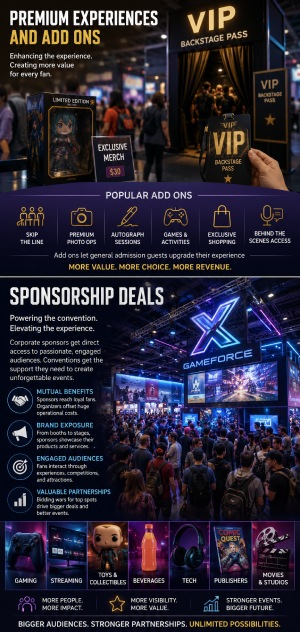
The majority of people arriving at the convention are not going to opt for the VIP packages. These are not really designed to be sold en masse either, there may be limited tickets for the VIP backstage passes or hospitality tickets with after parties. But for general admission guests who want some of these premium luxuries, convention organizers may organize add ons or auxiliary tickets just for select services.
For instance, anyone who wants to get their hands on the exclusive, limited edition merchandise may be able to pay just for that without having to buy a VIP ticket. The skip the line or priority access are also very popular add ons that general admission ticket holders could splash out on to limit the time they spend waiting in queues. Throw in the premium autograph or photoshoot sessions, additional games or activities, additional shopping privileges, or a peek behind the scenes at exclusive Q&A panels, and the revenue made from add ons can pile up significantly.
Sponsorship Deals
The media attention, advertising potential and significance of comic and entertainment conventions make them an ideal target for corporate sponsorship. Companies want direct access to highly engaged audiences that are already deeply invested in gaming, movies, comics, anime, collectibles, technology, and pop culture. Conventions can provide those networks and audiences en masse. Businesses can use the conventions as a stepping stone to advertise their brands, products and services to a dedicated host of potential customers.
The conventions are very much tailored for these kinds of partnerships, as they open up the possibility for catering, tech providers, payment processors, activity equipment or supply, all open for businesses to come into the picture. These businesses can make the most of these needs by facilitating the visitors, and interacting directly with potential customers through experiences, displays, competitions, and branded attractions.
For convention organizers, these partnerships are essential because sponsorship money can help cover enormous operational costs. A large convention may partner with gaming companies, streaming platforms, toy manufacturers, beverage brands, publishers, or movie studios, all of which want visibility at the event. Larger audiences are always the goal here. It is not just about selling more tickets and filling more seats.
It is also a testament to the popularity of the convention, its cultural significance, and its power to draw in new waves of fans. The more people the conventions can reach out and appeal to, the more valuable those sponsorship deals become. The largest conventions can command huge sponsorship deals, and even host bidding wars between major brands who will compete to take over as the convention’s provider of beverages, or staging equipment, or electronic payment processors, or any relevant area where they can promote their brands.
Licensing Partnerships
The bigger the audience and the stronger the media attention surrounding the convention, the more valuable the sponsorship opportunities become.
Licensing partnerships also play a major role in convention profitability. Entertainment franchises frequently collaborate with event organizers to release limited edition merchandise, host exclusive panels, or create special attractions tied to movies, games, television series, or comic properties. These agreements allow brands to monetize their intellectual property while conventions benefit from increased attendance and consumer spending.
The conventions also act as a place for brands to launch new products. There is less risk testing them out within the framework of a convention, as these do not need as much introduction or marketing effort to sell. The fans are familiar with the brands, are more susceptible to appreciating and perhaps getting excited by new releases, and they are the best audience to give proper feedback on how well the products are received. This is where savvy brands and retailers can experiment with new trends and bring fans limited edition or custom made products at a more premium cost.
Vendor Booths and Advertising Space
Vendor booths and exhibition spaces form one of the busiest commercial areas of any convention. Companies, independent creators, artists, retailers, and entertainment brands pay substantial fees to rent floor space where they can showcase products, sell merchandise, or promote upcoming releases. Depending on the convention size and foot traffic, booth space can become extremely expensive and highly competitive.
The convention floor is designed to keep visitors constantly moving through rows of retailers, displays, gaming areas, and interactive experiences. This gives businesses direct exposure to thousands of attendees across the event. Comic stores, collectible vendors, apparel brands, toy manufacturers, gaming companies, artists, and publishers all benefit from having immediate access to highly engaged consumers.
Advertising space throughout the venue is another valuable source of revenue. Banners, digital screens, branded stages, sponsored lounges, and promotional displays are all available for companies willing to pay for visibility. Large conventions essentially become giant marketing environments where every high traffic area can potentially be monetized.
For smaller creators and independent sellers, conventions are also one of the best opportunities to build visibility and attract loyal audiences. Artist alleys and creator booths help maintain the community aspect of conventions while still contributing financially through rental fees and commissions. The idea is to build on the grassroots and community efforts, and create a bridge between this and the official and corporate backed merch. Visitors are treated to rare fanmade art and merchandise, while the convention organizers have yet another stream of revenue to profit from.
Activation Deals
Activation deals are one of the fastest growing areas of convention business. Instead of simply placing logos around the venue, brands now create interactive experiences designed to fully immerse attendees in their products or franchises. These activations can include themed installations, virtual reality experiences, gaming tournaments, movie set recreations, livestream studios, cosplay competitions, or hands on product demonstrations.
The goal is to create memorable attractions that attendees will photograph, film, and share online. In many cases, these branded activations become some of the most talked about parts of the entire convention. Fans line up for hours to experience immersive displays connected to major gaming titles, blockbuster films, or popular franchises.
For sponsors, activation deals provide much deeper audience engagement than traditional advertising. Instead of passively seeing a logo, attendees actively interact with the brand itself. This creates stronger emotional connections and significantly increases online exposure through social media sharing and influencer coverage.
Conventions benefit heavily from these deals because activations increase the entertainment value of the event while also generating sponsorship revenue. Some conventions now dedicate entire halls or sections specifically to immersive attractions because of how popular they have become with modern audiences.
Retail and Convention Branded Merch
Retail spending is one of the defining aspects of convention culture. Many fans attend conventions specifically to purchase collectibles, comics, artwork, apparel, toys, games, posters, and limited edition items connected to their favorite franchises. The convention environment itself encourages spending because attendees are surrounded by exclusive products and highly targeted marketing.
Convention branded merchandise has become particularly valuable for organizers. Shirts, hoodies, collectible pins, badges, posters, lanyards, and exclusive artwork tied directly to the event all provide additional revenue opportunities. Fans often purchase these products as souvenirs or collectibles tied to memorable experiences at the convention.
Limited edition merchandise plays a huge role in driving consumer demand. Exclusive collectibles only available during the convention create urgency among attendees, with some fans arriving early specifically to secure rare items before they sell out. These products can later gain resale value online, further increasing their appeal among collectors.
Retail partnerships with entertainment franchises also create major revenue opportunities. Movie studios, gaming publishers, anime companies, and comic brands frequently collaborate with conventions to launch exclusive merchandise lines during the event. This creates excitement for attendees while giving franchises a direct retail platform to monetize fan enthusiasm.
Convention Marketing Strategies
Modern conventions rely heavily on aggressive marketing campaigns to maintain audience growth and cultural relevance. Social media, influencer partnerships, livestreams, celebrity announcements, and online fan communities all play major roles in building anticipation before the event begins. Marketing often starts many months in advance, gradually revealing major guests, panels, exclusive products, and attractions.
Digital-Live Crossovers
One of the biggest advantages conventions have is that they naturally generate viral content. Cosplay showcases, celebrity appearances, trailer reveals, gaming competitions, and fan reactions spread rapidly across platforms such as TikTok, YouTube, Instagram, Twitch, and X. This gives conventions massive organic exposure beyond the people physically attending the event.
Influencers and Digital Creators Impact
Influencer marketing has also become central to convention promotion. Streamers, YouTubers, podcasters, and content creators often partner with conventions to livestream events, conduct interviews, or share behind the scenes access with their audiences. Because these creators already have highly engaged communities, they help conventions reach millions of potential attendees directly.
Future Proofing by Building Communities
Community building is another strategy that can have tremendous long term potential, and one that conventions, sponsors and affiliated businesses cannot afford to ignore. Successful conventions maintain year round engagement through social media groups, Discord servers, newsletters, and online fan communities. This keeps audiences invested between annual events and helps conventions develop loyal fanbases that return year after year. Over time, conventions stop feeling like one off entertainment experiences and instead become recurring cultural traditions for their communities.