
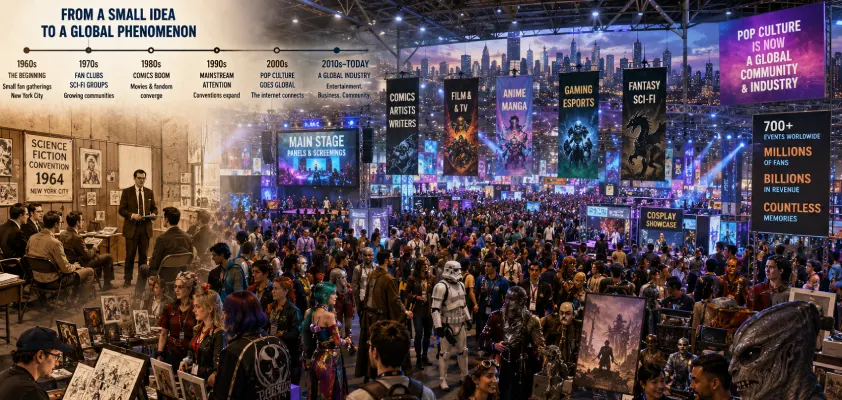
Conventions relating to pop culture are really something that started out as uniquely American, but are now a worldwide phenomenon. The very first convention was held in New York back in 1964, and a fan-hosted event, only around 100 people attended. There are pop culture quiz nights or autograph signings at comic stores that can draw more people nowadays. As for conventions, these have grown roots all over the country, and overseas, becoming outright festivals to celebrate every genre or media within pop culture.
Instead of niche events organized among friends, or local enthusiasts, there are events that can last for days, feature some of the world’s most prominent celebrities, and bring together tens of thousands of fans from all over the world. The biggest events do not stick to just one genre either. They can encompass virtually every niche, including comics, science fiction, anime, blockbuster films, classic books, and gaming. Where there is such public interest, huge logistics required, and tremendous logistics for organizers to wrap around, there is a demand for papabile financial backing. Conventions have very much evolved, and are now among the largest entertainment businesses, alongside sports events and major music festivals.
The Growth of Comic Conventions
Modern pop culture conventions have strong ties to comic conventions, and what is best described as the culture of comics. These informal gatherings gradually achieved mainstream attention, expanding into other niches such as film, television and gaming. The goal was to bring hobbyists and collectors together to discuss comic lore, share and trade unique memorabilia, and raise attention for the niche hobby. As these conventions grew in size, they also became strong platforms for writers to test new comics or release new work.
Today, these are the stages for comic fans to get closer to the work and immerse themselves into the lore. Comic conventions can have tons of activities, from Q&A panels with creators to teases of yet to be released work. Collectibles, gaming activities, cosplay and curated exhibitions are all among key attractions that continuously bring in the fans.
Retail Sector within Comic Culture
The retail industry was not far behind either. This was a major industry on the rise, and thus it could generate huge demand for memorabilia, toys, clothes, and gadgets for the dedicated fans. Conventions could incorporate retail services into the programs, sourcing rare collectibles and even limited edition products to help boost the revenue sources, and the appeal for the fans. It also created a niche for convention-branded items, celebrating the events themselves, as they grew in size and become more prominent in the communities.
Comic conventions nowadays are among the largest pop cultural events in the world, and they are no longer only constrained to the US. Fans from all over the world fly in just to catch the biggest conventions in America, often spending thousands of dollars for VIP experiences or to come up and close with the creators or actors.
The Influence of Superhero Franchises
Then, there was the booming appeal of the superhero films that also helped take comic conventions mainstream. Often featuring characters, stories, or lore from comic fandom, these transformed the media for the silver screen, with blockbuster movies and A-lister actors to bring the characters to life. This created a cycle where growing audiences increased convention attendance, which in turn attracted more media coverage and industry investment.
Film studios quickly recognized the promotional value of these events. They could capitalize on the existing infrastructure, tying the films to the core material and the original fanbases, gaining good publicity and scoring thousands of fans. Exclusive trailers, cast appearances, and major announcements transformed conventions into important marketing platforms for upcoming releases. As a result, conventions became essential dates on the entertainment industry’s annual calendar.
Gaming Expos, Anime Festivals and Fan Events
Comics may have been the core drivers of the conventions, but it was through gaming expos, anime festivals and fan-driven events that the convention runners could explore just how versatile these events could be. For they could branch into multiple genres, bringing in more retail supply, activities, and cater to wider audiences. Going into more depth, and specializing to a larger extent, these events were not just poised for mainstream audiences, but could also bring in the passionate fans who would be willing to spend more and travel longer distances to attend.
In the 21st century, these experiences shifted with digital entertainment trends. They could pull in eSports, a rising gaming genre with massive grassroots interest – much like the early days of comic fandom. Competitions could be hosted for eSports, with exclusive previews, cosplay events, creator meetups and insights behind the scenes of the games. Streaming culture has also been a major force in keeping conventions up with the times. For the popularity of influencers, digital content and social media have been nearly impossible to miss, and now a focus on streaming and digital experiences is vitally important.
The International Expansion of Fan Festivals
International expansion is not a one way street. A big part of the international expansion has surely been bringing in Asian, European, African and South American fans to these major US events. Especially as the convention marketing becomes more globalized and easier to reach. But that has also revolutionized the conventions themselves, to cater to these guests.
The most ground breaking change was the introduction of anime and manga, cultural Asian media, into US conventions. Bringing in international media or pop culture helps solidify and reinforce the US conventions, and give local US citizens a taste of these foreign genres.
It doesn’t all happen in the US either, as the need for these conventions have now spread. US convention runners can partner up with organizers in major countries abroad, networking and helping to bolster conventions themselves as a major and international entertainment business.
Need for Structured Ticketing Systems
As conventions grew larger, and the programs became more layered, they could no longer use traditional ticketing or entry fee structures. Crowd management at modern conventions can cause all kinds of logistical headaches. Though there are machine learning and data tools to help them work out traffic patterns, optimize venue selection and circulation, and make projections for general admission revenue and crowd sizes.
The ticket systems had to evolve too. These systems now utilize those very tools to work out pricing estimates, explore different admission tiers and how visitors respond to these, and build systems that can accommodate as many visitors as the organizers forecast for. Ticketing is very closely related to scheduling, as well as crowd management. A well organized convention distributes key attractions and events in conveniently planned programs. They don’t throw all the key events on the last day or have main attractions running at the same time, forcing visitors to choose between them.
The Rise of Premium Convention Experiences
The other aspect of ticketing is the rise of VIP packages, hospitality tickets and customizable experiences for the fans. These premium packages can include early access, reserved seating, exclusive merchandise, or private sessions with special guests. They are an additional source of revenue for the organizers, and an offered extra for fans who want to feel that VIP treatment and experience the convention like no other.
Though conventions may also provide some of these perks to general admission ticket holders through extras or add ons. For instance, anyone looking for priority access and to skip the line may be able to buy this as an add on. Or, buy the exclusive merch given to VIP members, get a premium autograph session, or try any of the VIP reserved activities, these may be offered in ticket extensions. As conventions continue to grow, premium experiences are likely to become even more sophisticated.
Financial Backing and Sponsorships
Conventions can rack up a mighty bill, comprising venue and equipment rentals, paying for guest appearances, and then logistical overheads. A strong financial projection and framework is a necessity for convention runners, as they want to be able to provide the best of the best, without going bust and not being able to continue the show the following year. While a lot of the money does come back through retail and ticket sales, they do need financial backers and sponsors. The same goes for sporting events, music festivals, and other major conventions. Financial backers can include industry insiders, entertainment companies, gaming publishers and technology brands.
Then, there is the sponsoring to consider. Companies that offer to manage the catering, provide payment processors, handle the staging equipment can all use the convention as a stage to market their goods. In the ideal business relationship, the sponsor is gaining massive publicity and the convention is receiving either financial backing or bespoke services handled by the sponsor. Sponsorship revenue has become one of the key factors enabling conventions to continue expanding.
Corporate Investment in Fan Communities
Many companies view conventions as an opportunity to engage directly with highly dedicated consumers. Unlike traditional advertising, convention sponsorships allow brands to create interactive experiences. These go a little beyond simple brands displayed across boards or on convention merch. With a little creating thinking, the sponsors can use the opportunity to test new products on fans, invite them to participate in demonstrations, and interact with company representatives in person.
This direct connection often generates stronger brand loyalty than conventional marketing campaigns. As a result, corporations are increasingly willing to dedicate significant resources to convention participation. This advertising space, or unique position, in the conventions is an area that gets more competitive as the convention grows. Major brands can have bidding wars to become the official sponsors of the largest conventions, further boosting the organizers’ resources.
Celebrity Appearances, Publicity and Cultural Significance
Celebrity appearances have become one of the defining characteristics of modern pop culture conventions. Actors, voice performers, authors, artists, directors, and content creators often serve as major attractions that drive attendance and media coverage. Just announcing major celebrity guests or panels can drive up the hype among fans. Their star power influences ticket pricing, impacts the publicity of the convention, and has the potential to bring in thousands of fans globally.
These appearances generate publicity that extends far beyond the attendees themselves. Media outlets frequently report on major announcements, exclusive reveals, and notable guest appearances, increasing public awareness of both the convention and the franchises represented there. Over time, conventions have become important cultural milestones where fans, creators, and entertainment companies interact directly. This has elevated their status from fan events to influential fixtures within popular culture.
Conventions as Entertainment Industry Platforms
Many entertainment companies now use conventions to launch marketing campaigns and build anticipation for upcoming projects. Exclusive previews, first look footage, and cast panels often generate substantial online discussion and media coverage. These conventions, for the most part, have very loyal fanbases that work perfectly for entertainment companies.
This role has made conventions increasingly valuable to studios, publishers, and production companies. Rather than simply gathering fans together, conventions now function as important promotional channels within the broader entertainment ecosystem. Their influence often extends far beyond the duration of the event itself.
Fan Engagement Models
The most successful conventions understand that attendees are seeking more than passive entertainment. Fans increasingly want opportunities to participate, interact, and become part of the experience. As a result, convention organizers have developed engagement models that place community involvement at the center of the event. These can include panels, workshops, cosplay contests, gaming tournaments, fan meetups, and interactive exhibits all encourage active participation.
All of which give valuable insights into how people react and engage with what the organizers deliver. Through platforms like social media these interactions are further extended. Organizers can react to attendees sharing experiences in real time. It also becomes a good point to build for the future, as the convention runners can put out content to remain connected throughout the year. These engagement strategies help strengthen community loyalty while encouraging repeat attendance. In many ways, the ability to create meaningful fan experiences has become one of the most valuable assets a convention can possess.
Building Year Round Communities
When the events have finished and the guests leave, the business does not just abruptly halt. Far from it, organizers are already working on the next event, promoting it on social media channels, through online forums and in newsletters to maintain engagement levels with the fans. Digital entertainment is a huge industry and one that can be utilized to keep these conventions relevant and in high demand.
Maintaining engagement is also key to making a better convention the following year, or at the next opportunity. While there are the mainstay events that fans will pay to see or attend every single year, there are also trends and cultural phases that come and go. Nuances that can certainly find a place at conventions. Bringing in viral influencers, addressing recent cultural phenomena, and learning from the last convention are all helpful signals to continuously improve these events.
Using the Statistics for Future Reference
From a more analytical point of view, data inputs like audience feedback, engagement levels with different activities, and other statistics to determine crowd preferences are all valuable to finding out what works and what doesn’t. There are experimental exhibitions, test crossovers and new formats that may be integrated into conventions to retain a level of surprise and intrigue. If these pay off, they may return the next time with anyone who missed out paying top dollar to get involved.